Hollywood, Ending book tour has excellent turnout following Green brothers’ controversy earlier this year.
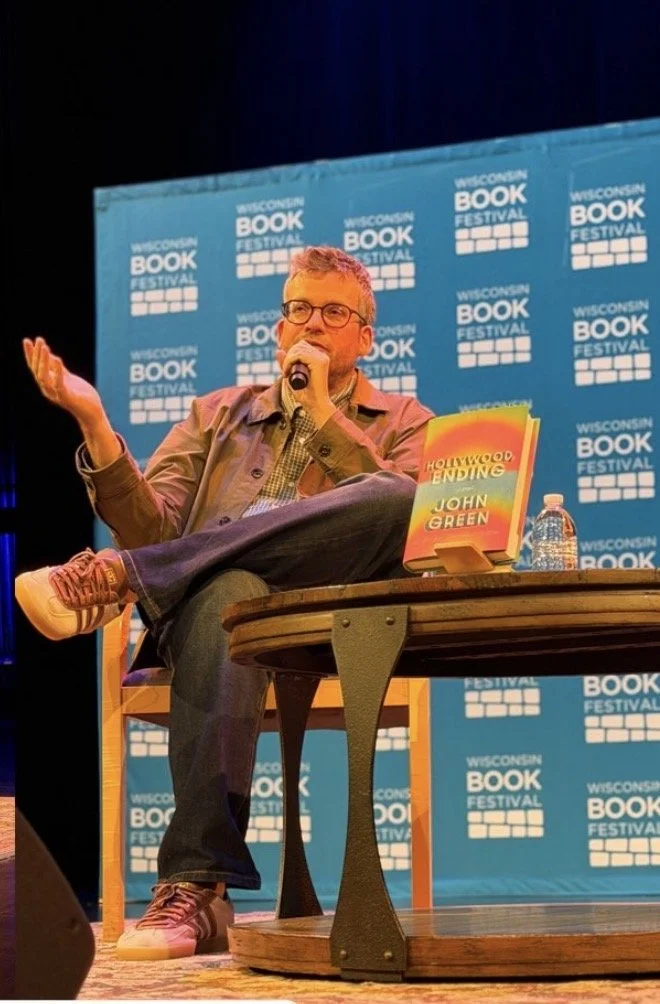
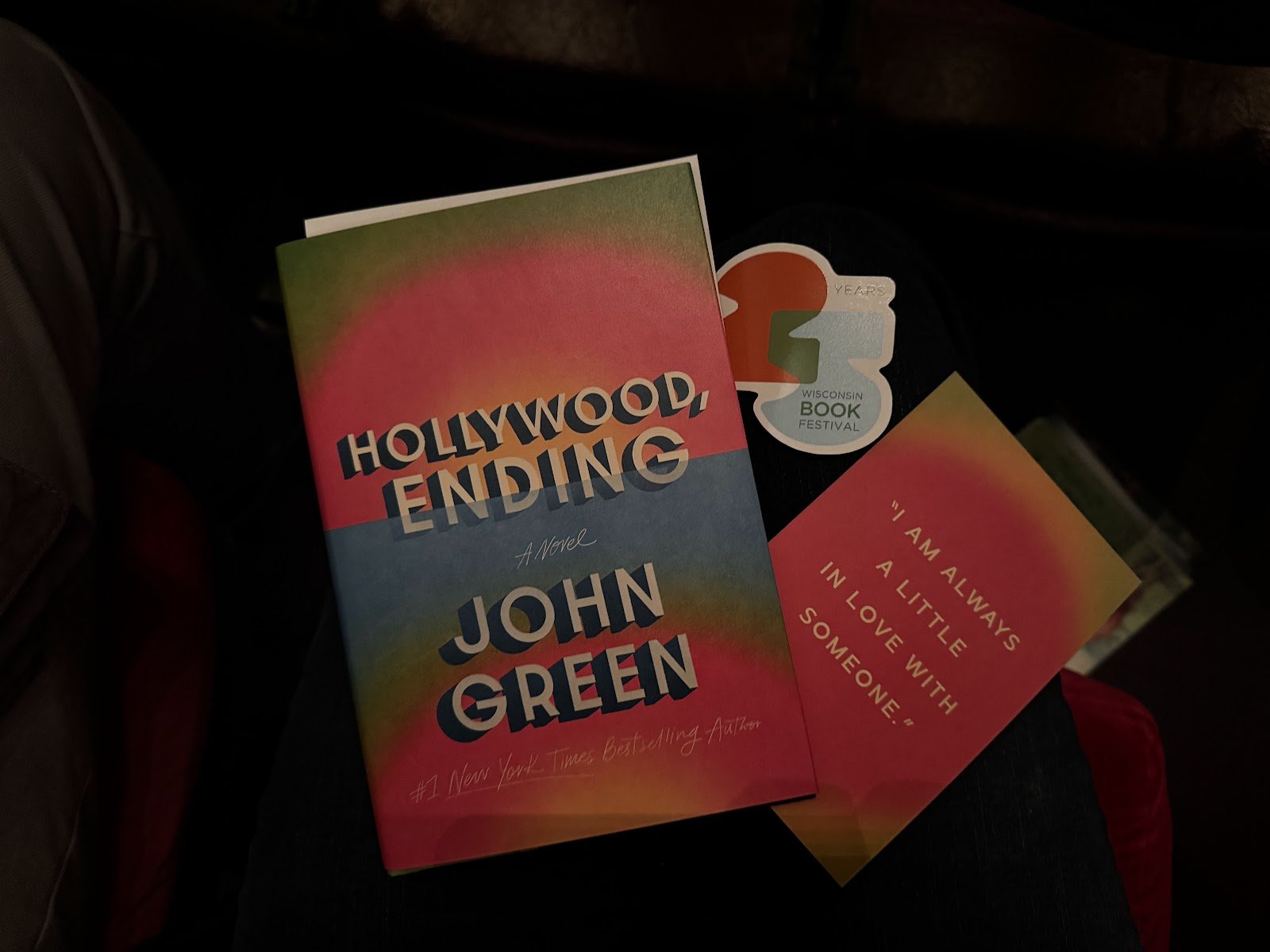
John Green, New York Times bestselling author, screen-writer, and well-known contributor to the rise of the manic-pixie dream girl, returned to the world of fiction writing after nearly a decade with his newest release, Hollywood, Ending. The second to last stop on his book tour for this release brought him to Madison’s The Overture Center on October 1st. The event, hosted by the 25th Annual Wisconsin Book Festival, drew an enormous crowd so large that overflow members were stuck audio-only in the Overture lobby. A Room of One’s Own, a local Madison bookstore, helped sponsor the event and worked to provide signed copies of Hollywood, Ending and had for sale the rest of Green’s catalog.
Green, interviewed by Craig "Wheezy" Benzine, created the perfect atmosphere for what he dubbed “weird, shared experiences.” This set up for the discussion of humanity and the creative process– a weird experience in itself. The conversation centered around Green’s struggle with this novel and the long gap of time between his previous fiction release and Hollywood, Ending.
Hollywood, Ending is Green’s first adult romance centered around two young adults working on the production of a fictional biopic titled Andy Warhol Never Gets Old. Green blamed social media for the end of long-form media and wanted to explore what that meant. His own complaints of being dubbed an influencer making content over an artist making art, as well as discussion of why calling our work– no matter how rough—art is now “cringe,” were crucial to the environment of the event. Even more so were Green’s statements that “Art is not optional for humans” and “Art will always be made by humans.” Consequently, John Green used this moment to allude to earlier this year when his brother, Hank Green, faced controversy for using large-language model artificial intelligence in his work.
Green stated none of his work ever had a true villain, Hollywood, Ending included, which readers of his previous fiction like Looking for Alaska and The Fault in Our Stars might recognize. “The villain is the system… the machine,” he claimed to a loud round of applause from the audience. Green brought on discussion of how “Fame is the worst good thing to happen to me,” and how the lack of privacy in modern society plays a crucial role in his life and the lives he chose to write about in this new release. Green claimed that celebrity flattens people and transforms them into caricatures of themselves. He wanted to portray himself as is, which was a theme in his work The Anthropocene Reviewed: Essays on a Human-Centered Planet.
John Green’s previous works were notorious for receiving backlash from people elected to ban the titles across the United States. John Green alone was banned more than 20 times in the 2024-25 school year. Alternatively, while not banning his work, critics called out his archetypal characters, use of harmful tropes, and misrepresentations of trauma in youth also undoubtedly did not look forward to the release of his newest work. However, Hollywood, Ending still shot to the top of the New York Times’ bestsellers list. So, it begs the question of whether he’s improved or just retains his fame both as a YouTube star and novelist?
Regardless of his controversies, John Green drew an ecstatic crowd out to downtown Madison for this event, which was the only unticketed one on his tour. Green created an earnest atmosphere that emphasized hope and, of course, love for the crowd. One of Green’s closing sentiments, “When you pay attention to why you love what you love, it almost always connects to something larger,” resonated with me more than anything else from the evening. I looked around a room filled with adoring fans, and it was something larger: a group of people who came together for a novel. Better yet, a novel written by a notoriously outspoken and frequently banned author. “Despair makes nothing but more of itself,” Green claimed, and that theater understood that hope—just like in this new release—was more important.